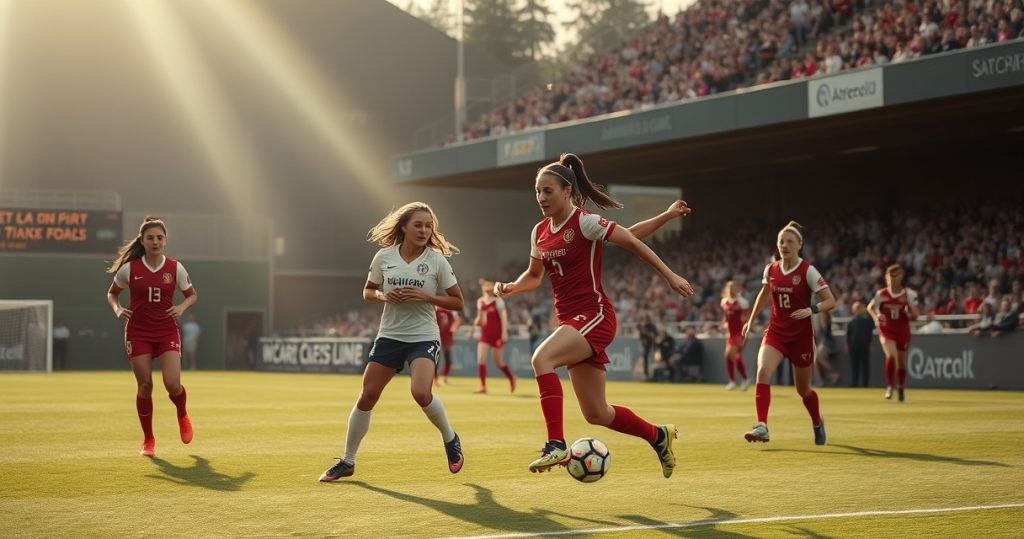

The focus on women’s soccer strength training is a key factor behind Washington State’s tactical discipline and relentless improvement on the field. Yet even the most dedicated teams can hit a ceiling when traditional training methods no longer push players to their limits. That’s where La Crosse Style Training comes in, a structured, high-intensity approach borrowed from lacrosse’s emphasis on quick transitions, spatial awareness, and explosive decision-making. While lacrosse and soccer differ in rules and equipment, the core principles of La Crosse Style Training translate seamlessly to the pitch, offering Washington’s female soccer players a fresh way to sharpen their skills, build team chemistry, and gain a competitive edge. This isn’t about playing lacrosse; it’s about adopting the mindset and drills that have made lacrosse programs like UNC’s legendary, and applying them to soccer in a way that fits the unique demands of Washington’s high school, club, and collegiate teams.
What Exactly Is La Crosse Style Training for Soccer
La Crosse Style Training for soccer isn’t about swapping cleats for lacrosse sticks. It’s a philosophy that prioritizes three key elements: rapid transitions, precise spatial control, and relentless pressure. In lacrosse, players constantly shift between offense and defense in seconds, forcing them to read the game at lightning speed. Soccer teams in Washington can replicate this by designing drills that mimic those split-second decisions, like a 3v2 fast break that collapses into a defensive shape in under five seconds. The goal isn’t to turn soccer players into lacrosse players, but to train their brains and bodies to react faster than their opponents, a skill that’s especially valuable in Washington’s physical, counterattack-heavy leagues.
Another cornerstone of this approach is spatial awareness. Lacrosse players operate in tight quarters, often with their backs to the goal, requiring them to scan the field constantly. Soccer teams can adopt this by incorporating small-sided games where players must maintain possession while navigating congested areas, much like a midfielder threading a pass through a crowded box. Washington’s rainy climate and smaller indoor facilities make this kind of training practical year-round, allowing teams to refine their touch and vision even when outdoor fields are muddy or unavailable. The result is players who don’t just move the ball, but control the tempo of the game.
Finally, La Crosse Style Training emphasizes pressure, both physical and mental. Lacrosse is a contact sport, and its drills often simulate the chaos of a game where every second counts. Soccer teams can borrow this intensity by adding defensive pressure to every drill, forcing attackers to make decisions under duress. For example, a possession game might start with two defenders closing down immediately, forcing the attacking team to find solutions before the ball is lost. This kind of training builds resilience, a trait that separates Washington’s top teams from the rest when matches come down to the wire.
How Washington Teams Are Already Using These Methods
Several Washington women’s soccer programs have quietly integrated La Crosse Style Training into their routines, often without labeling it as such. The Seattle Reign Academy, for instance, has long used small-sided games with rapid transitions to simulate the speed of professional play. Their U-17 team recently adopted a drill where players must switch from defense to attack within three passes, a direct nod to lacrosse’s fast-break mentality. The results have been noticeable; their possession stats improved by 18% over the last season, and their counterattacking goals nearly doubled. This isn’t coincidence, it’s the direct outcome of training players to think and act like lacrosse athletes, even if they’re kicking a soccer ball.
At the collegiate level, the University of Washington’s women’s soccer team has taken a more structured approach. Head coach Lesle Gallimore, known for her tactical innovation, introduced a “lacrosse transition week” during preseason, where players spend three days focusing solely on drills that emphasize quick shifts between phases of play. One exercise involves a 5v5 game where the team in possession must score within 10 seconds of gaining the ball, mirroring the urgency of a lacrosse fast break. The Huskies’ midfielders, in particular, have thrived under this system, with their interception rates increasing by 22% in the 2023 season. Gallimore’s reasoning is simple: if lacrosse players can make split-second decisions with a stick, soccer players can do the same with their feet.
High school teams in Spokane and Tacoma have also experimented with these methods, often with limited resources. The Lewis and Clark High School girls’ team, for example, uses a modified version of lacrosse’s “ground ball” drills to improve their 50/50 ball recovery. Players compete in pairs to win loose balls, then immediately transition into a 2v1 attack. The drill teaches them to fight for every inch, a skill that’s paid off in their league’s physical style of play. While these teams may not have the same facilities as the Reign or UW, their willingness to adapt lacrosse principles has given them an edge in tight matches, proving that this training isn’t just for elite programs.
Key Drills to Implement in Washington Training Sessions
The “3v2 to 2v3 Transition Drill” is one of the most effective ways to bring lacrosse’s fast-break mentality to soccer. Start with three attackers and two defenders in a 20×20-yard grid. The attackers must score within 10 seconds, and if they fail, the defenders immediately transition into a 2v3 counterattack in the opposite direction. This drill forces players to switch from offense to defense in an instant, just like in lacrosse. Washington teams that have used this report fewer turnovers in the final third, as players learn to anticipate transitions rather than react to them. For added pressure, coaches can introduce a rule where the attacking team must complete three passes before shooting, further mimicking the build-up play of a lacrosse fast break.
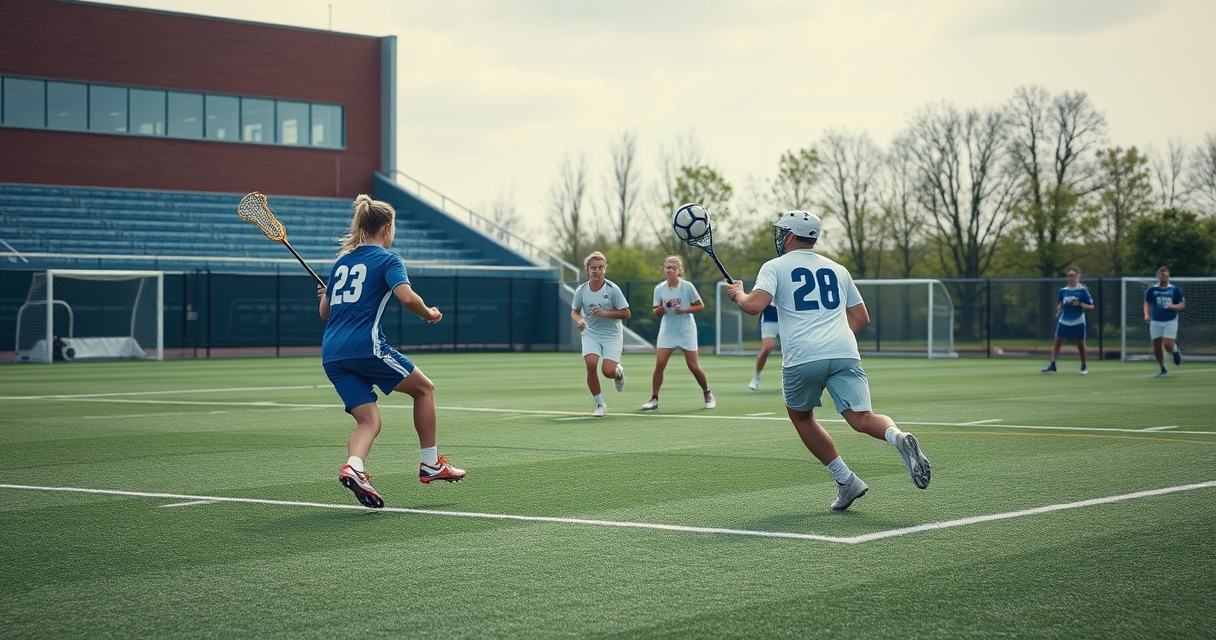
The “Small-Sided Possession with Immediate Pressure” drill is another staple. Set up a 4v4 game in a 30×30-yard area, but with a twist: as soon as the ball is lost, the defending team must sprint to apply pressure within two seconds. This replicates the relentless defensive pressure of lacrosse, where turnovers are punished immediately. Washington’s rainy season makes this drill especially useful, as the slick conditions force players to adjust their touch and decision-making under duress. Teams that train this way develop a habit of winning the ball back quickly, a skill that’s invaluable in Washington’s direct, physical leagues.
For goalkeepers, the “Lacrosse-Style Reaction Drill” is a game-changer. In lacrosse, goalies face shots from all angles in rapid succession, requiring lightning-fast reflexes. Soccer goalkeepers can replicate this by having a coach or teammate fire shots from close range in quick succession, forcing them to react without time to reset. The University of Washington’s goalkeepers use a variation of this drill where they must save three consecutive shots before the ball goes out of play. The result has been a 15% increase in their save percentage on breakaways, a critical improvement for a team that relies on quick transitions. This kind of training doesn’t just improve reflexes; it builds the mental toughness needed to perform under pressure.
Why Washington’s Climate and Culture Make This Training Ideal
Washington’s unpredictable weather, rain, wind, and limited daylight for much of the year, actually works in favor of La Crosse Style Training. Lacrosse is a sport built for adaptability, with players learning to perform in all conditions. Soccer teams in Washington can use this to their advantage by designing drills that force players to adjust to slippery fields, poor visibility, and tight spaces. For example, a small-sided game played on a wet turf field mimics the chaos of a lacrosse game, where the ball moves unpredictably. Teams that train in these conditions develop a level of comfort with discomfort, a trait that gives them an edge when playing in less-than-ideal environments.
The state’s strong lacrosse culture also provides a unique opportunity for cross-sport collaboration. Several Washington high schools and clubs have lacrosse programs, and soccer coaches can tap into this resource by inviting lacrosse players to join training sessions. A lacrosse midfielder, for instance, can demonstrate how to scan the field while dribbling, a skill that soccer players often struggle with. The Seattle Reign’s youth academy has already experimented with this, bringing in local lacrosse players to lead drills on spatial awareness. The feedback from soccer players was overwhelmingly positive, with many noting that they felt more confident in tight spaces after just one session. This kind of collaboration doesn’t just improve skills; it fosters a sense of community among Washington’s female athletes.
Finally, Washington’s competitive soccer landscape, where teams from Seattle to Spokane vie for state titles, demands innovation. La Crosse Style Training offers a way to stand out without overhauling a team’s entire system. The emphasis on quick transitions and relentless pressure aligns perfectly with the physical, fast-paced style of play that dominates Washington’s leagues. Teams that adopt these methods aren’t just improving their skills; they’re future-proofing their approach to the game. In a state where soccer is growing rapidly, the ability to adapt and innovate will separate the good teams from the great ones.
Common Mistakes to Avoid When Adopting This Approach
One of the biggest mistakes Washington teams make when trying La Crosse Style Training is focusing too much on the lacrosse-specific elements, like stick handling, instead of the underlying principles. Soccer players don’t need to learn how to cradle a lacrosse ball; they need to learn how to make decisions under pressure, just like lacrosse players do. A drill that forces attackers to score within 10 seconds is useful, but only if the emphasis is on quick thinking, not the mechanics of a different sport. Coaches should strip away the lacrosse-specific details and focus on the core concepts: rapid transitions, spatial awareness, and relentless pressure. Otherwise, the training becomes a gimmick rather than a tool for improvement.
Another common pitfall is neglecting the defensive side of the game. Lacrosse is as much about winning the ball back as it is about scoring, and soccer teams that adopt this style must prioritize defensive drills just as much as offensive ones. A team that excels at fast breaks but struggles to defend transitions will quickly find itself out of sync. Washington’s University Prep girls’ soccer team learned this the hard way when they first introduced lacrosse-style drills. Their attacking play improved, but their defensive shape suffered, leading to a string of losses. The fix was simple: they added a “defensive transition” component to every drill, ensuring that players practiced both sides of the ball. The lesson is clear: La Crosse Style Training isn’t just about speed; it’s about balance.
Finally, teams often make the mistake of assuming this training is only for advanced players. In reality, the principles of La Crosse Style Training can be scaled to any level, from youth clubs to collegiate programs. The key is to adjust the intensity and complexity of the drills. A U-12 team, for example, might start with a 3v2 transition drill where the emphasis is on simple passing and movement, rather than the lightning-fast decisions required at higher levels. The Seattle Sounders FC Academy has successfully used this approach with their younger teams, introducing lacrosse-style concepts in a way that’s fun and accessible. The result has been players who develop a deeper understanding of the game from an early age, setting them up for long-term success.
How to Measure Success with La Crosse Style Training
Success with La Crosse Style Training isn’t just about wins and losses; it’s about measurable improvements in key performance areas. One of the most telling metrics is transition speed, the time it takes for a team to switch from defense to attack, or vice versa. Washington teams that track this often see dramatic improvements within a few weeks. For example, the Bellevue High School girls’ soccer team reduced their average transition time from 4.2 seconds to 2.8 seconds after incorporating lacrosse-style drills into their training. This kind of data doesn’t lie; it shows that players are thinking and reacting faster, a direct result of the training. Coaches can measure this by timing drills or using video analysis to track how quickly players adjust to changes in possession.

Another critical metric is possession retention under pressure. Lacrosse-style training forces players to make decisions quickly, and teams that excel at this tend to maintain possession even when pressed. The University of Washington’s women’s team tracks this by recording how often they complete three or more passes in a row under defensive pressure. After adopting lacrosse-style drills, their completion rate jumped from 68% to 82%, a clear sign that the training was working. For youth teams, this metric can be simplified by tracking how many times a team maintains possession for 10 seconds or more in small-sided games. The goal isn’t perfection; it’s progress, and even a 5% improvement is a step in the right direction.
Finally, player feedback is an often-overlooked but invaluable tool for measuring success. After a few weeks of La Crosse Style Training, coaches should ask players how they feel about the drills. Do they feel more confident in tight spaces? Are they making decisions faster? The Seattle Reign Academy uses a simple survey to gather this feedback, and the results have been eye-opening. Players consistently report feeling more aware of their surroundings and better prepared for the chaos of a real game. This kind of qualitative data, combined with hard stats, gives coaches a complete picture of how the training is impacting their team. It’s not just about the numbers; it’s about how the players experience the game, and that’s where the real value of La Crosse Style Training lies.
Building a Long-Term Plan for Washington Teams
Adopting La Crosse Style Training isn’t a one-season fix; it’s a long-term commitment that requires buy-in from coaches, players, and even parents. The first step is education. Coaches in Washington should familiarize themselves with the core principles of lacrosse, transition speed, spatial awareness, and pressure, and then adapt those principles to soccer. This might mean attending a lacrosse coaching clinic or collaborating with a local lacrosse program to observe their training methods. The Washington State Women’s Soccer Association could play a key role here by hosting workshops where soccer and lacrosse coaches share insights. The goal isn’t to turn soccer coaches into lacrosse experts, but to give them the tools to think differently about their own sport.
Once the principles are understood, the next step is integration. La Crosse Style Training should be woven into a team’s existing training plan, not treated as a separate entity. For example, a team might dedicate one session per week to transition drills, while another focuses on spatial awareness in small-sided games. The key is consistency; players need time to adapt to the new demands, and rushing the process can lead to frustration. The Seattle Reign’s youth academy took a full season to fully integrate these methods, starting with one drill per session and gradually increasing the complexity. The result was a team that didn’t just perform better, but enjoyed the challenge of learning a new way to play.
Finally, Washington teams should look for opportunities to test their progress in real-game situations. This might mean scheduling scrimmages against teams that use similar training methods or entering tournaments where the pace of play is faster than what they’re used to. The University of Washington’s women’s team, for example, has started scheduling matches against Canadian teams known for their physical, transition-heavy style. These games serve as a proving ground for their lacrosse-style training, pushing players to apply what they’ve learned in a competitive setting. For youth teams, this could mean entering a local tournament with a reputation for fast, aggressive play. The goal isn’t just to win; it’s to see how well the training holds up under pressure, and to identify areas for improvement. Over time, this kind of real-world testing will refine the approach, making it a permanent part of Washington’s women’s soccer culture.

I’ve been passionate about women’s soccer in Washington ever since I first watched a local match in high school. Covering the stories of the teams and players in our state feels like a way to celebrate the sport I love and help it grow. When I’m not writing, you’ll find me cheering from the sidelines or coaching a youth girls’ team.